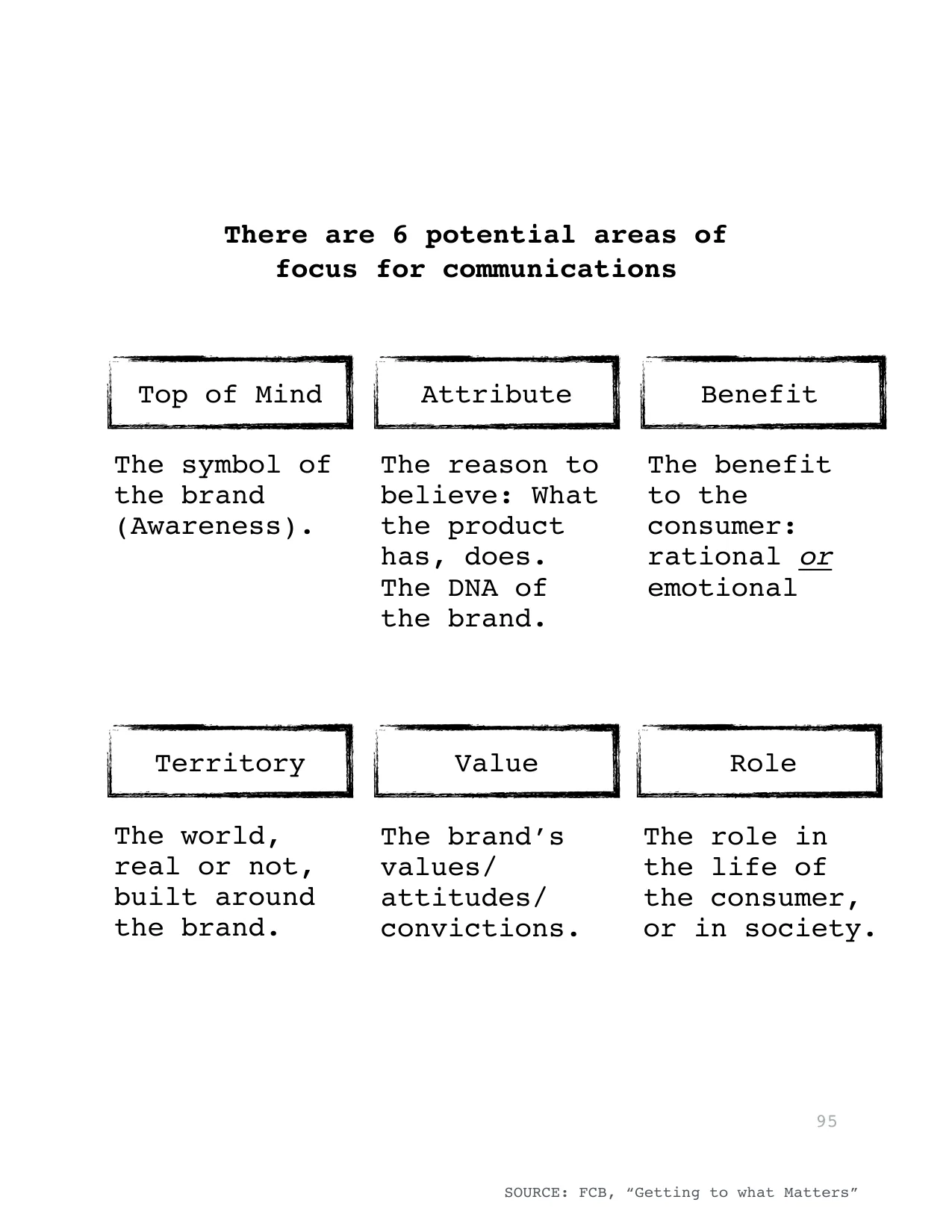
Don’t over complicate it.Top of Mind
Attribute
Benefit
Territory
Value
Role
The symbol of
the brand
(Awareness).
The reason to
believe: What
the product
has, does.
The DNA of
the brand.
The benefit
to the
consumer:
rational or
emotional
The world,
real or not,
built around
the brand.
The brand’s
values/
attitudes/
convictions.
The role in
the life of
the consumer,
or in society.
There are 6 potential areas of
focus for communications
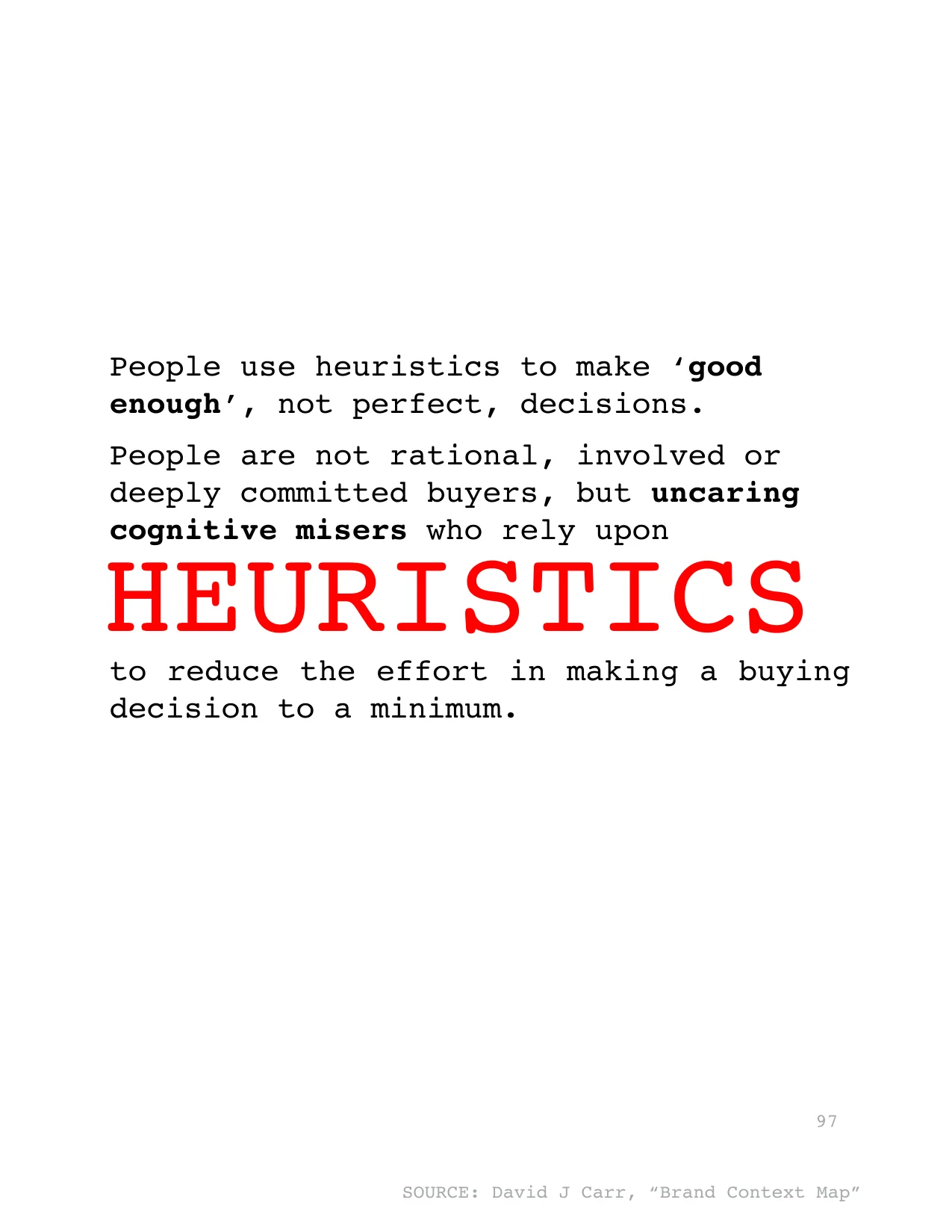
SOURCE: FCB, “Getting to what Matters”to reduce the effort in making a buying
decision to a minimum.
HEURISTICS
People use heuristics to make ‘good
enough’, not perfect, decisions.
People are not rational, involved or
deeply committed buyers, but uncaring
cognitive misers who rely upon
SOURCE: David J Carr, “Brand Context Map”People believe [X], but [Y] is
actually true
****
You know what's funny?
****
You know how [X]?
****
__________ except __________
****
_________, but _________
****
_________, _________
****
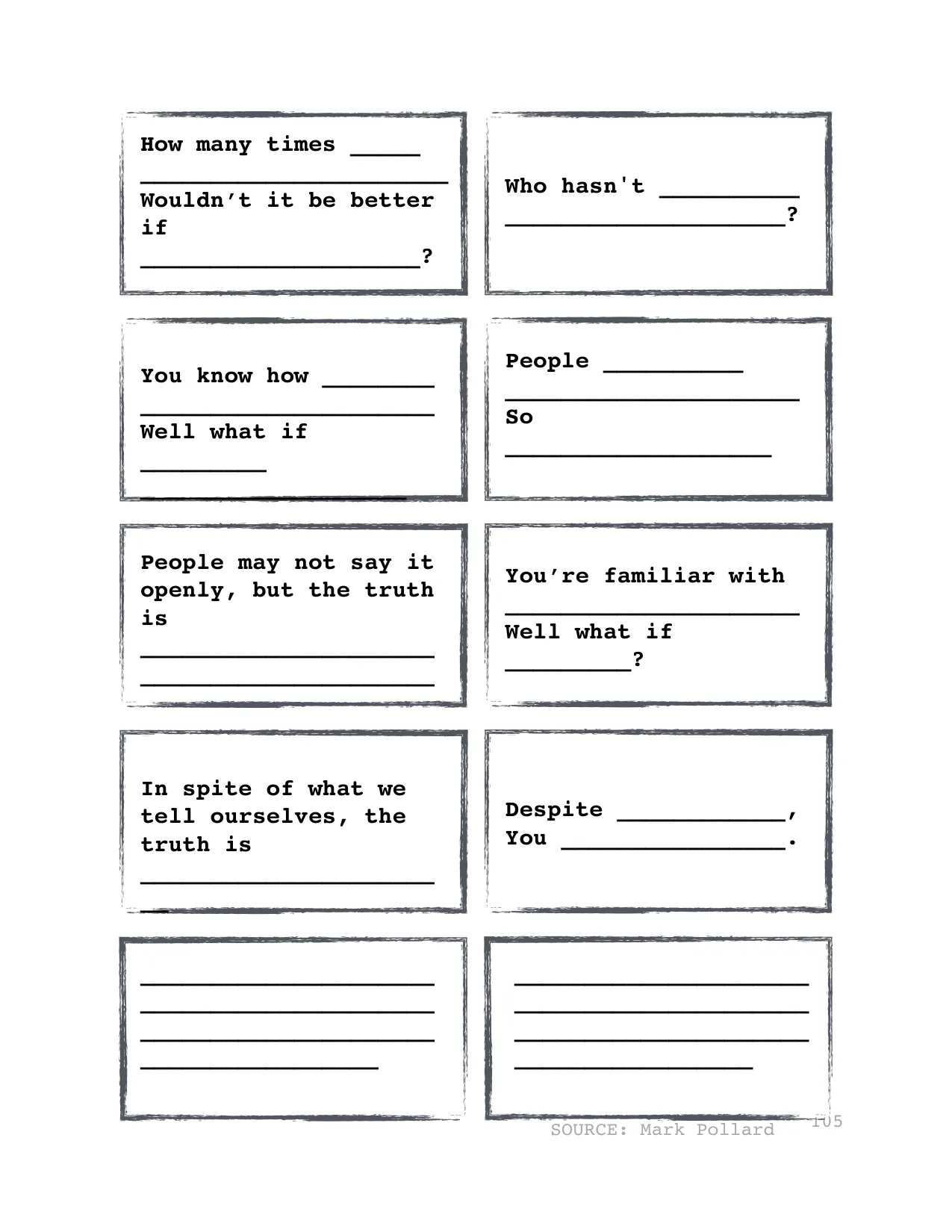
SOURCE: Mark PollardHow many times _____
______________________
Wouldn’t it be better
if
____________________?
Who hasn't __________
____________________?
People __________
_____________________
So
___________________
You know how ________
_____________________
Well what if
_________
___________________
People may not say it
openly, but the truth
is
_____________________
_____________________
You’re familiar with
_____________________
Well what if
_________?
In spite of what we
tell ourselves, the
truth is
_____________________
__
Despite ____________,
You ________________.
_____________________
_____________________
_____________________
_________________
_____________________
_____________________
_____________________
_________________
SOURCE: Mark Pollard****
- Repetition
- Simple Analogies
- Repetition
= Communications Success
Short Powerful Messages

![“History is not about the conflict between right
and wrong. It is the conflict between two rights.”
–Georg Wilhelm Friedrich Hegel
[ ], BUT [ ]
Do this exercise with truths &](/pages/page-093.webp)

![People believe [X], but [Y] is
actually true
****
You know what's funny?
****
You know how [X]?
****
__________ except __________
****
_________, but _________
****
_________, _________
****
SOURCE:](/pages/page-103.webp)